ECONSHIP 2026 will feature a dynamic programme of Special Sessions, designed to foster focused dialogue on key thematic areas shaping the future of maritime economics and global supply chains. These sessions bring together leading academics, researchers, and industry experts to explore specialised topics, encourage interdisciplinary exchange, and present cutting-edge research aligned with current industry challenges and policy developments. Each session is curated by distinguished organisers and offers contributors the opportunity to engage with targeted audiences and advance scholarly and practical discussions within their field.
Further Special Sessions, developed in collaboration with partnering associations, are currently in preparation and will be announced soon.

Shipping markets operate in volatile conditions, marked by capital intensity, cyclical freight rates, and increasing regulatory pressures. In this environment, effective financial risk management and informed investment decisions are critical for resilience. At the same time, reliable and transparent information is essential. Research in shipping accounting examines how financial data is produced, disclosed, and used by stakeholders, shaping decisions, accountability, and market trust.
Together, accounting and finance provide the foundation for sound decision-making in maritime transport.
In stormy markets and globally turbulent system dynamics, shipping markets are characterised by asset intensity, pronounced cyclicality in freight rates, and exposure to regulatory and environmental constraints. In this context, financial risk identification, assessment, and management are essential in ensuring resilience. The financial economics of shipping markets explores the technologies of risk management and the financial structures that shape investment decisions and asset values, including vessel investment cycles, chartering decisions, and capital structure choices, mapping the dynamics of equilibria in money and capital markets for shipping. Sound financial, managerial, and strategic decisions are impossible without reliable information. Leading research in shipping accounting explores the content, structure, quantity, quality and reliability of disclosed information by shipping companies and organisations. More importantly, shipping accounting research examines the factors, motives and material concerns that shape organisational and individual decisions on the production and dissemination of information to investors, lenders, regulators and chartering counterparties, while also addressing how accounting information contributes to legitimacy, accountability and the broader social evaluation of maritime activity. Together, accounting and finance form the informational and analytical foundation of decision-making in maritime transport.
The organisers invite contributions across all major areas of corporate reporting, managerial accounting, capital markets, and financial decision-making in shipping, including but not limited to:
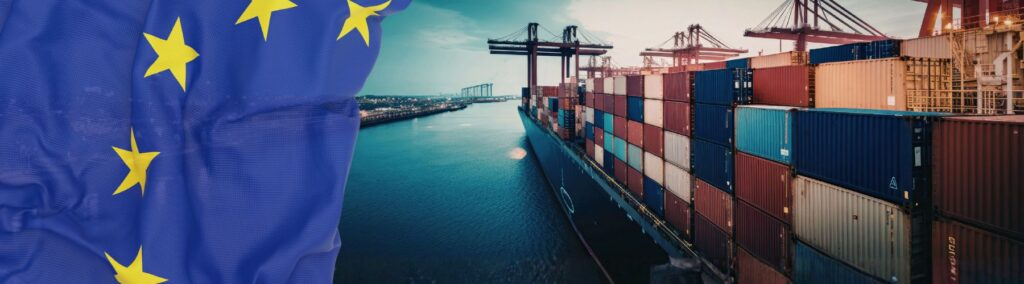
The Special Session on European Policies for Shipping, Ports, and Related Maritime Supply Chains offers a focused platform to examine how evolving European Union policies are shaping the competitiveness, sustainability, and resilience of the maritime sector. As shipping, ports, and their interconnected supply chains remain central to Europe’s economy and global trade, the session brings together academic and policy perspectives to explore current regulatory developments and their implications for the future of maritime transport.
This Special Session is supported by:

Prof. Athanasios Pallis (Jean Monnet Chair European Port Policy, University of Piraeus, Greece)
Prof. Juan Montero (Florence School of Regulation, Italy)
Organised by the Jean Monnet Chair in European Port Policy, University of Piraeus, in collaboration with the Transport Area of the Florence School of Regulation of the European University Institute, the session(s) aim to critically discuss existing or potential European Union (EU) regulatory advancements that accelerate the competitiveness and sustainable development of shipping, ports, and related maritime supply chains in the EU and beyond. Shipping, ports, and related supply chains are cornerstones of the European economy and world trade, which are shaped by regulatory initiatives developing at national, regional, or global scales. The EU is currently developing a comprehensive strategy to support the long-term competitiveness of the maritime sector.
The session welcomes contribution on themes such as the recent European Commission’s communications addressing either exclusively sectoral issues (e.g. Maritime Industrial Strategy, European Ports Strategy, the Sustainable Transport Investment Plan, etc) or broader themes affecting maritime transport (e.g. state aid, foreign direct investment, energy security circularity, etc.) and Intermodalism (e.g. interoperability of transport modes) aiming to advance rigorous academic dialogue on the current and future regulatory framework for European shipping, ports and the broader maritime cluster. The organisers are seeking original papers on topics ranging from regulatory challenges to any initiatives aiming at sustainable maritime transport development. Contributions that employ multidisciplinary and interdisciplinary approaches to regulation and other initiatives are highly encouraged
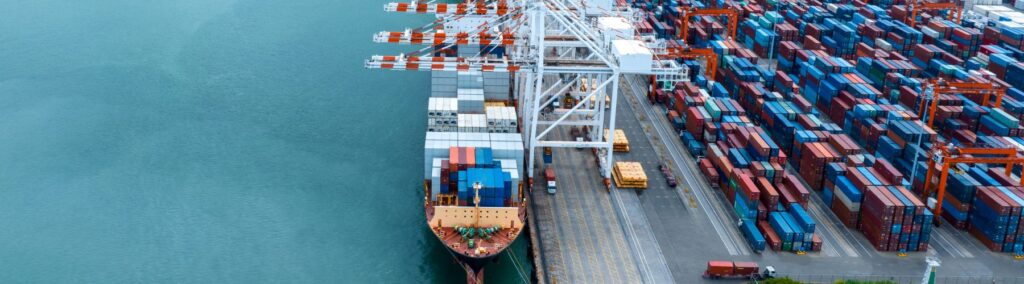
The Special Session on Energy Transition: Ports, Cities and Territories explores the pivotal role of ports as key enablers in the shift toward sustainable energy systems. Positioned at the intersection of maritime transport, urban environments, and regional economies, ports are central to complex transition processes that extend beyond technology to include spatial, environmental, and socio-economic dimensions. This session brings together interdisciplinary perspectives to examine how ports, cities, and territories are adapting to new energy realities, fostering collaboration, governance innovation, and inclusive, place-based approaches that support sustainable transformation pathways across Europe and beyond.
This Special Session is supported by:
Prof. Carola Hein (UNESCO Chair Water, Ports and Historic Cities, Delft University, The Netherlands)
Prof. Thanos Pallis (Jean Monnet Chair European Port Policy, University of Piraeus, Greece)
Prof. Gordon Wilmsmeier (Kühne Logistics University (KLU), Germany / School of Management, Universidad de los Andes, Colombia)
Ports are critical nodes in the global energy system and critical enablers in the transition from fossil fuel to alternative fuel and energy regimes. Located at the interface of maritime systems, urban environments, and regional economies, port transitions generate complex environmental, spatial, and socio-economic challenges for related port-city and territorial systems. As a result, ports, cities and territories can act as collaborative, intercultural, and political laboratories of energy transition processes. The complexity of the ongoing transition requires more than technocratic solutions—it also demands for interdisciplinary, participatory, and place-based approaches.
Τhe scope of the special session(s) is twofold. First, to explore how ports are evolving in the current energy transition in terms of innovation, economics and role across multiple spatial scales, i.e., from local urban environments to global supply chains. Second, to advance the understanding of the spatial, environmental, and socio-cultural dynamics of ports, cities and territories in transitions, exploring issues related to the rethinking of port–city relationships through governance innovation and systemic integration, the development of collaborative and interdisciplinary solutions involving academia, industry, and society, the equitable participation of communities, stakeholders, and policymakers, methodologies, and best practices across regions. The target is to advance knowledge co-production, alternative governance models, and sustainable transformation pathways in ports, cities and territories across Europe and beyond.
Following the presentation and peer review, papers presented at the special session(s) may be published in the scholarly journal Ports and Cities & Territories.
To facilitate intellectual exchange, the International Scientific Committee of ECONSHIP 2026 invites the submission of Special Session Proposals that bring together cohesive contributions around a focused theme within maritime economics, transport, and logistics.
Proposals should include:
All Special Session Proposals should be submitted in line with ECONSHIP 2026 guidelines and timelines, as communicated by the Organising Committee.